? “A Stone Falls into the Spillway / Harri bat erori da gainezka-bidera” – a critical взгляд on water, infrastructure, and visuality
The book A Stone Falls into the Spillway / Harri bat erori da gainezka-bidera offers an in-depth reflection on hydraulic policies in the Spanish state and the images that have accompanied them over the last century. Going beyond a narrative of large-scale infrastructure construction, the book examines how the control of water has been a central element—not only technical but also symbolic—in shaping models of society and their ecological imaginaries.
Starting from the Navarrese context, a series of texts by different authors explores cases ranging from canalization and port ecosystems to major hydraulic projects and hydroelectric architecture. These essays combine diverse methodologies to reveal the ideological and visual disputes that have shaped the water industry: the interests that drove these projects and the critical voices that challenged them.
With careful attention to the visuality and materiality that permeate our ways of relating to water and territory, the book invites readers to rethink not only physical works—dams, canals, spillways—but also the visual and cultural narratives that sustain them.
A Stone Falls into the Spillway thus brings together art, critical thought, and ecology to reread the past and to question the ways in which we configure our relationship with resources, landscape, and the apparatuses of power.
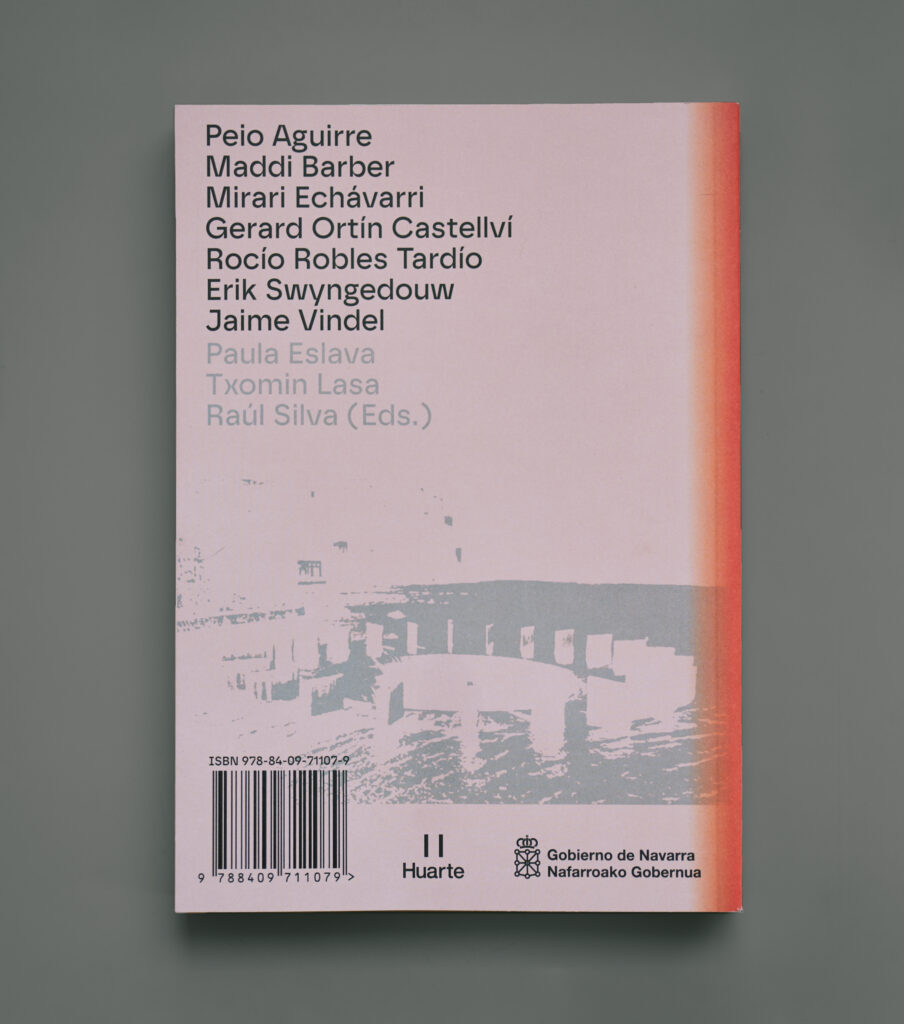
?? Authors and contributors:
-
Rocío Robles Tardío
-
Jaime Vindel
-
Erik Swyngedouw
-
Peio Aguirre
-
Maddi Barber
-
Mirari Echávarri
-
Gerard Ortín Castellví
Coming from diverse fields such as critical theory, geography, cultural studies, and art, these authors articulate essays that intertwine history, ecology, politics, and aesthetics, shedding light on the ideological struggles that have accompanied the governance of water over the last century.