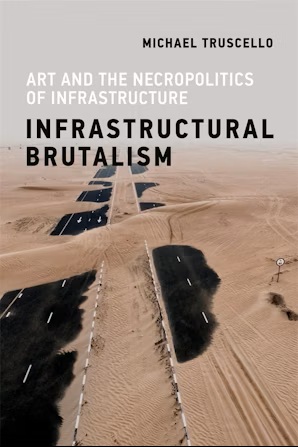
In Infrastructural Brutalism, Michael Truscello explores the necropolitics of infrastructures-how they determine who can live and who must die-through the lens of artistic media. He examines white settler nostalgia for the fiction of ‘drowned towns’ written after the Tennessee Valley Authority flooded rural areas for hydroelectric projects; argues that the road movie represents a struggle against liberal governmentality; considers the ruins of oil capitalism as seen in photographic landscapes of post-industrial waste; and offers an account of ‘death train narratives’ ranging from Holocaust history to post-apocalyptic fiction. Finally, he calls for a ‘brisantic politics’, a culture of undoing capable of stemming the tide of capitalist suicide. “Brisance’ refers to the shattering effect of an explosive, but Truscello uses the term to point to a variety of practices for defeating infrastructural power. Brisantic politics, he warns, would require a reorientation of radical politics towards infrastructure, sabotage and cascading destruction in an interconnected world.